ServicesWater Testing
Water Testing in Peoria, With Every Result on Record
Before anyone talks about equipment, we test the water coming into your home and photograph each result as we go. You see the same numbers we see, hear what they mean in plain terms, and decide what happens next with no obligation.
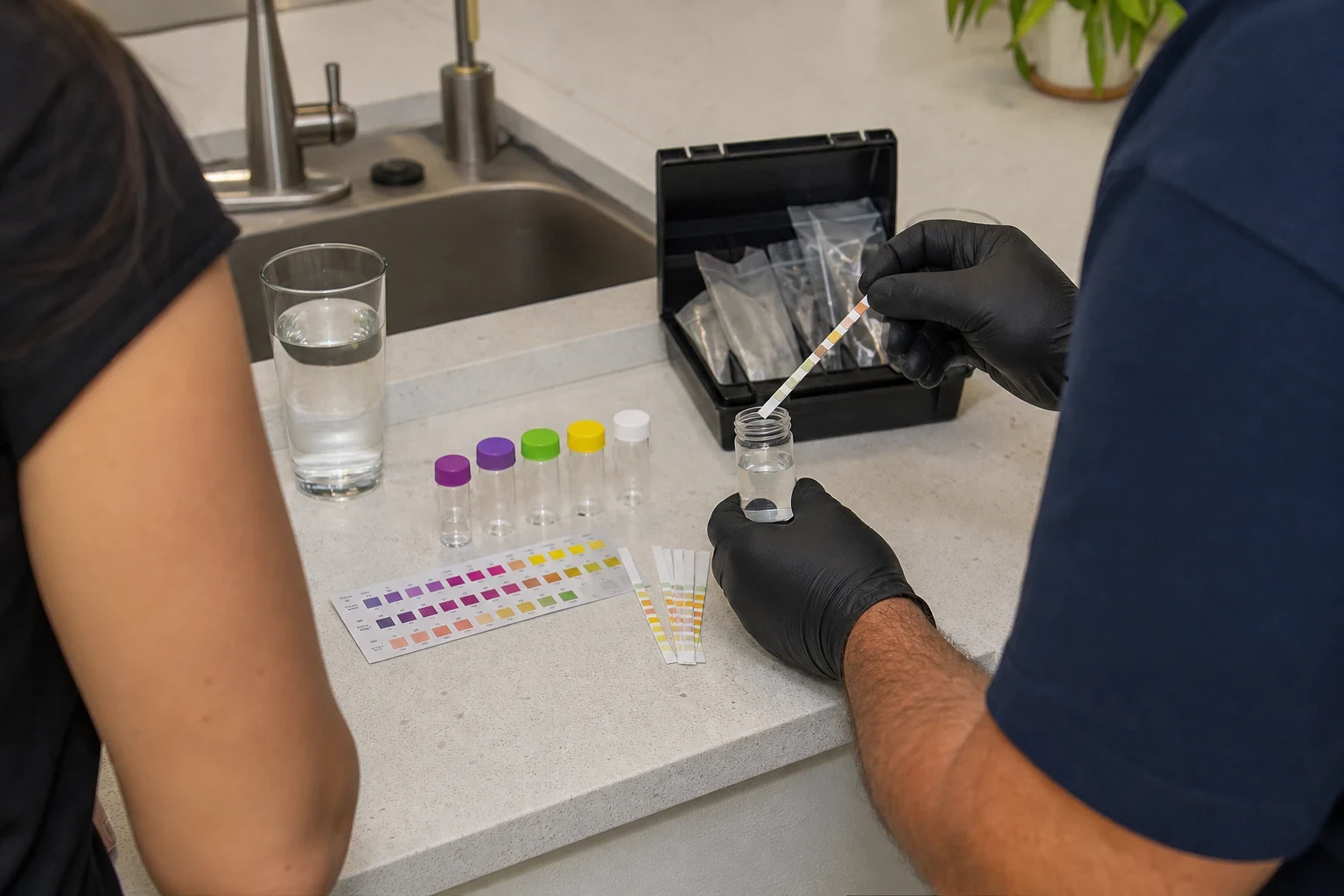
What a Water Test Tells You
Water can look clear in the glass and still leave white crust on faucets, spots on shower glass or a flat taste in your coffee. A test puts numbers to what you are noticing. We check the water at the tap where it enters your home, then at a fixture or two you use every day.
Each reading is photographed beside the test kit or meter that produced it. That record matters later. If you choose a softener, a whole-home filter or a reverse osmosis system, the equipment is sized from those numbers, and you can compare them against the next test to see the system doing its work.
Sometimes the honest answer is that your water is fine for how you use it. We will tell you that just as plainly.
What We Check During Your Visit
- Hardness
- We measure calcium and magnesium in grains per gallon. Hard water is common across the West Valley, and this number decides whether a softener is worth having and how large it should be.
- Total dissolved solids
- A meter reading shows the overall mineral load in your water. It is the clearest single guide to whether reverse osmosis would make a noticeable difference at the kitchen sink.
- Chlorine
- City water is disinfected on purpose, so some chlorine is expected. We record the level so you know whether the taste or smell you notice has a measurable cause.
- pH and iron
- pH tells us whether water leans acidic or alkaline, which affects fixtures over time. An iron check rules out rust-colored staining as a separate problem.
- A look at your plumbing
- We note your main shutoff, pipe material and the space near your water heater or garage entry. That way any later recommendation already accounts for where equipment could fit.
- Your photo record
- Every result is captured and walked through with you before we leave, so nothing depends on memory or a sales pitch.
Signs Your Water Is Worth Testing
White scale on fixtures
Chalky buildup on faucets, showerheads and the dishwasher door usually points to hardness. A test shows how much.
Spotted glass and dull dishes
Film that returns after every wash is often mineral residue left behind as water dries.
Taste or smell you avoid
If you buy bottled water because the tap tastes of chlorine or minerals, a reading tells you which one and what would address it.
Dry skin or stiff laundry
Calcium and magnesium react with soap and leave a residue that clings instead of washing off. Bath linens dry scratchy, and your skin can feel tight once you step out of the shower.
A water heater that works harder
Popping or rumbling from the tank can mean scale has settled at the bottom. Testing helps you decide whether to protect a new heater from the same fate.
Equipment that came with the house
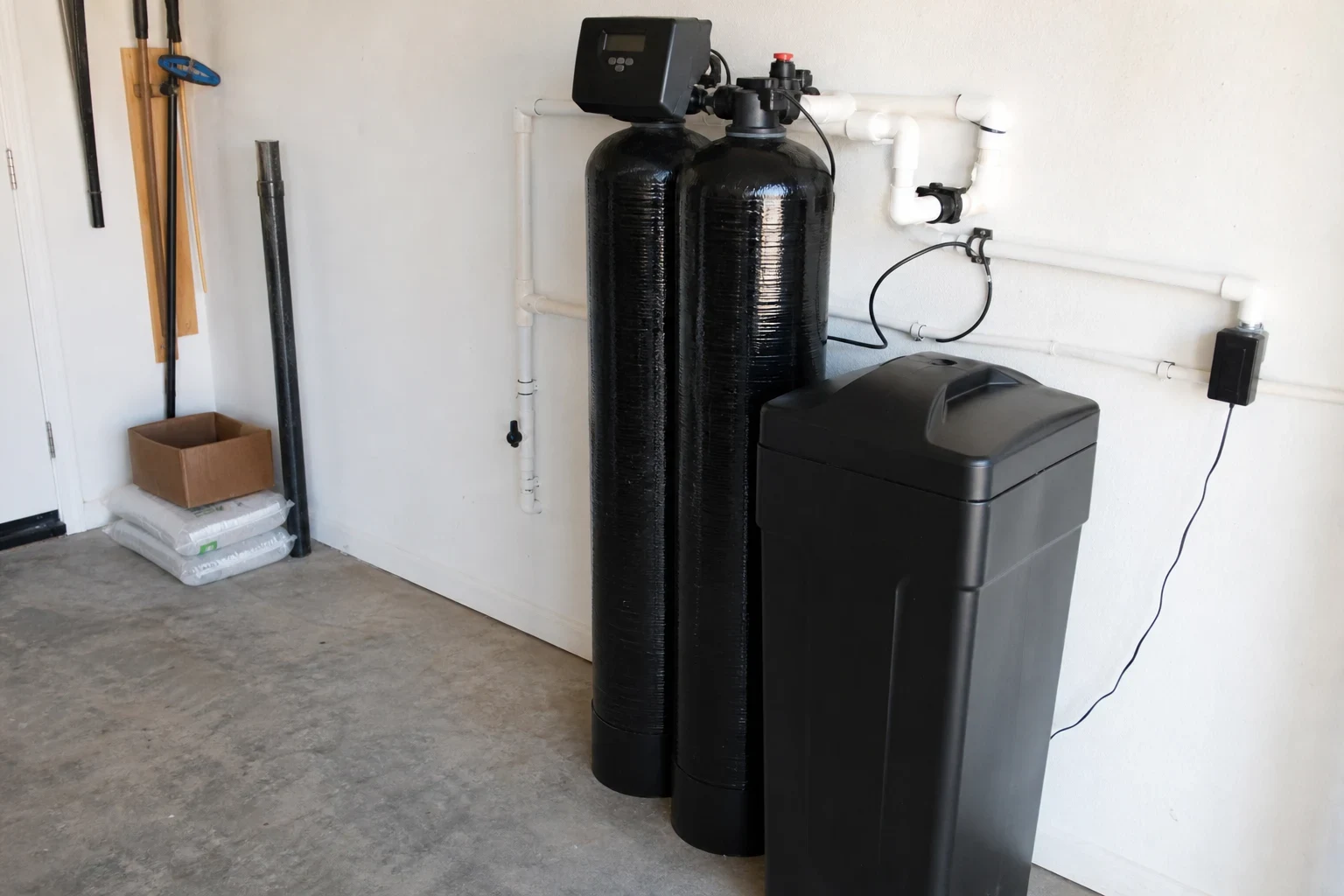
Plenty of homes change hands with a softener or filter already sitting in the garage. Reading the water before and after it tells you whether that equipment is still doing anything useful.
How the Visit Goes
- 1
Pick a visit window by phone
Tell us what has caught your attention about your water, and we settle on a time that works around your day. There are no forms and nothing to get ready.
- 2
Samples at the right taps
We draw water close to where it enters your home and at a fixture you use often. Tests run on the spot, and we photograph each strip, vial or meter display beside its sample.
- 3
Results at your kitchen table
We go through the numbers one by one and explain what is normal, what is high and what simply does not matter for your household.
- 4
Options, or none
If a system makes sense, we explain which type, why, and what installed system pricing would look like. If nothing is needed, we say so and leave you the full record either way.
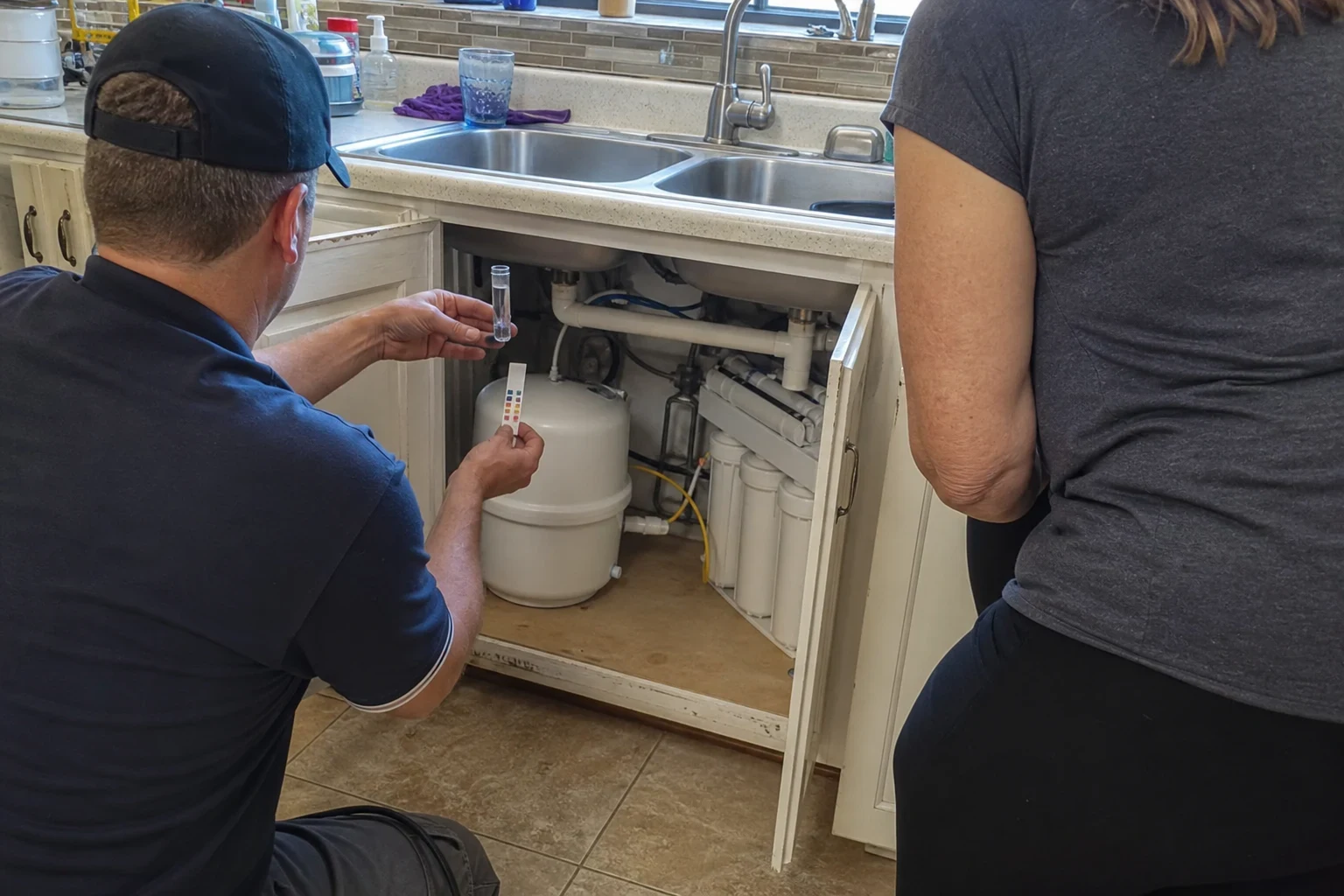
The Test Is Free. Here Is What Might Follow
You pay nothing for the water test and owe nothing afterward. Any later spending hinges on your readings and what you choose to do with them. Because install is included with water treatment systems, a price from us means the system set up and working in your home, not a box of parts.
- What the readings show
- Very hard water needs a bigger softener holding more resin. A middling result might call for just a smaller unit or a filter.
- The problem you want gone
- A bad taste at a single tap leans toward reverse osmosis below the sink. Buildup in every room leans toward softening or whole-home filtration.
- Room to work and pipe access
- An open loop on the garage wall is an easier job than a cramped closet that needs fresh pipe. We make a note of it at the visit so nothing catches you off guard.
- Who lives there and how much they use
- How many people share the house, and how many showers and sinks get used, decides the daily demand a system must meet. That guides the capacity we recommend.
Common Questions About Testing
Something not covered here? (480) 660-8241
Does the test actually cost nothing?
It does. There is no fee and no obligation attached. The photos of each reading stay with you, even if you never buy a thing from us.
How much of my day will the visit take?
Plan on a slice of a morning or afternoon, not the whole thing. Running the tests takes only minutes. Most of the visit goes to explaining what the numbers mean and answering questions at an easy pace.
The city says my water passes. What is the point of testing?
Passing drinking water rules is one thing; being nice to live with is another. Safe water can still be hard enough to crust up fixtures or carry a heavy chlorine taste. A test shows which of those, if either, your home has.
Is a test strip from the store good enough?
A strip gives you a ballpark, which is a reasonable place to begin. Our meters and kits read with more precision, we check more than one tap, and every result is recorded so you have a firm baseline for later.
Do you check for lead?
An in-home kit is not the right tool for lead; a lab sample is. If your pipes or the age of the house make lead a concern, we explain how that sample gets taken and what the result would tell you about your drinking water.
Does hard water automatically mean I need a softener?
No. That call rests on the number, how much the buildup annoys you and what you are trying to protect. We share the reading, lay out the pros and cons and leave the choice with you, and doing nothing is one of the choices.
See What Is in Your Water
A free visit gives you real numbers, a record of each one and a calm explanation. What you do with them is entirely up to you.