ServicesWater Softeners
Water Softeners in Peoria, Sized From Your Water Test
We measure the hardness at your tap, size a softener to that number and your household, then install it neatly in your home. You get photos of the old setup, the new connections and the finished work, so nothing is left to guesswork.
Is a Softener What Your Home Needs?
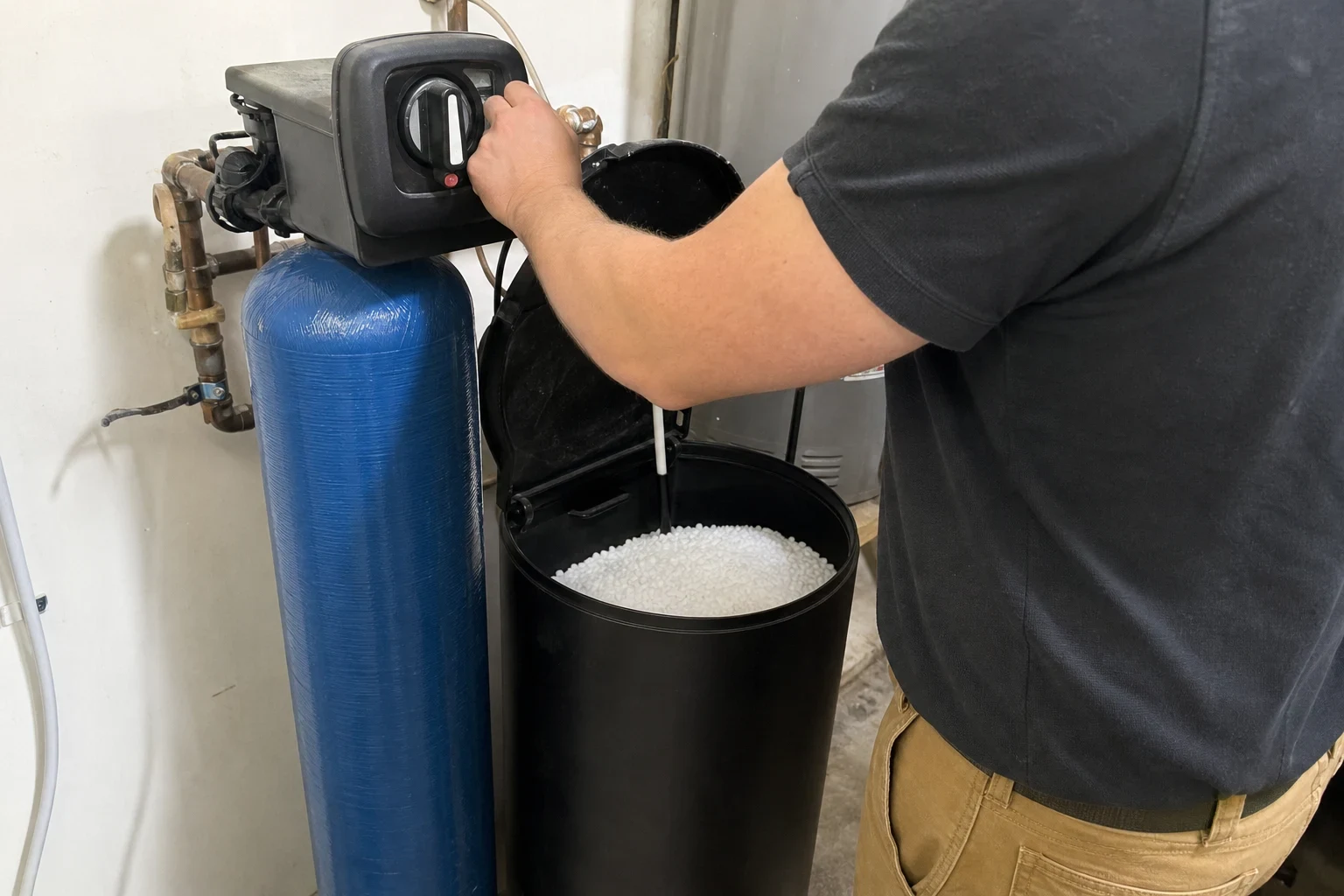
Calcium and magnesium are the culprits behind crusty faucets, cloudy shower glass and scale in the water heater, and a softener pulls them out. Inside the tank, a bed of resin beads catches those minerals as water flows by and swaps in a little sodium or potassium. On a schedule, the control valve flushes the beads with brine from the salt tank, carrying the minerals down the drain and resetting the resin for more use.
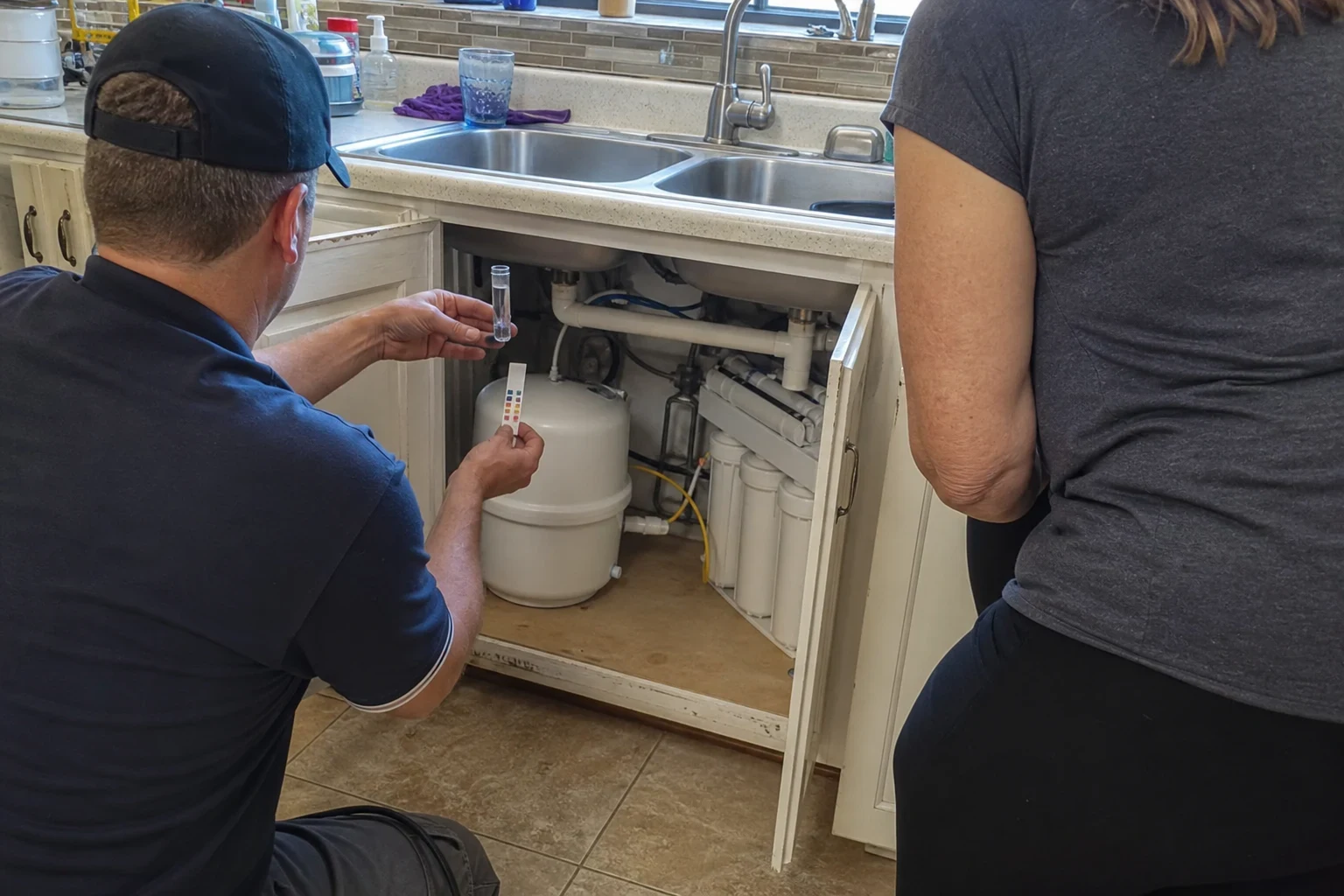
A test always comes before a recommendation. Hardness is different in every home, and a unit sized to the wrong figure either gives out too soon or burns through salt. The free water test carries zero obligation, and you keep the reading no matter what you choose.
When the results point to taste or smell as the real problem instead of minerals, we tell you plainly and walk through whole-home filtration or reverse osmosis as options.
What Your Softener Installation Includes
- 01
Hardness and household sizing
Grain capacity is chosen from the hardness we measured and how many people and bathrooms the system serves. Getting that right keeps regeneration cycles sensible and salt use reasonable.
- 02
Connection to your main line
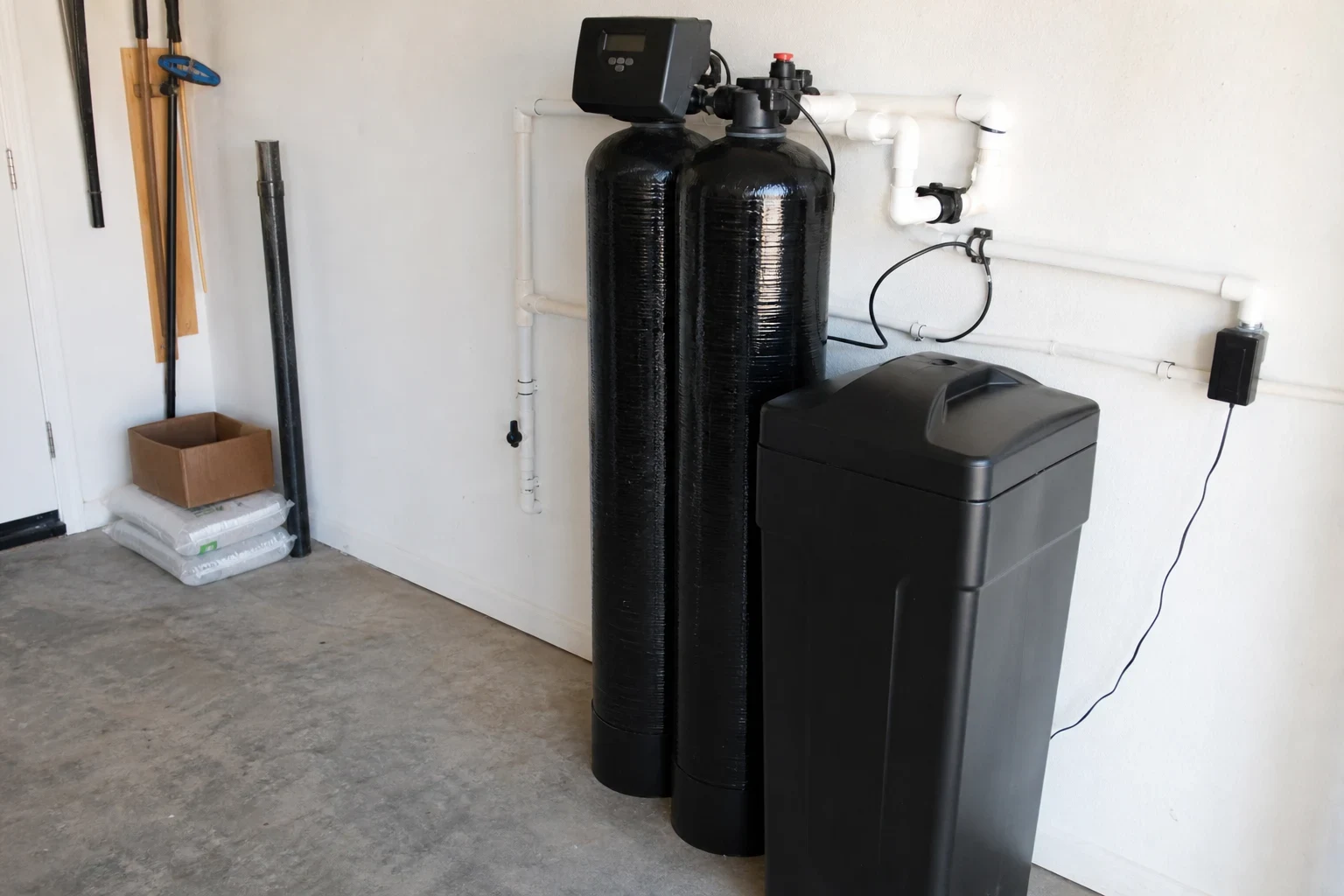
Many homes in the area already have a softener loop near the garage or water heater. If yours does, we connect to it. If not, we plan a clean route and show you where it will run before we cut anything.
- 03
Bypass valve and drain line
Every system gets a bypass so you can isolate it for service without shutting off your water. The drain line is secured with a proper air gap so brine discharge cannot back up into the unit.
- 04
Programming and first regeneration
We set the hardness value, the regeneration time and the salt dose, then run a full cycle while we are there. You see the system work before we leave.
- 05
Photo record of the job
We capture the original plumbing, any corrosion or scale we found, each new fitting and the finished install, and pass the full set to you. It is a useful record for future service or when you sell your home.
- 06
Installation included
Install included with water treatment systems, so the price we quote covers the equipment and the work to fit it.
Questions about Water Softeners?
Call(480) 660-8241When Hard Water Starts Showing Up Around Your Home
White buildup on fixtures
Chalky scale that comes back a week after you scrub it is the most common clue. It also clogs aerators and narrows the spray from showerheads.
Spots on glass and dishes
Hard water leaves mineral spots as it dries. Glass shower doors cloud over and dishwasher loads come out filmy even with rinse aid.
A noisy or slow water heater
Scale settles at the bottom of the tank and pops as it heats. Over time it insulates the burner or element from the water and cuts efficiency.
Soap that will not lather
Calcium reacts with soap and forms curd instead of suds. You end up reaching for extra shampoo and detergent, and towels and skin still feel tacky afterward.
An old softener that no longer keeps up
If spots have returned despite a unit in the garage, the resin may be worn or the system undersized. A fresh test tells us which.
The Job, Step by Step
- 1
A free test at your tap
We read the hardness at a faucet and look at where the supply line enters the house. You keep the results and get a plain answer on whether a softener is worth it.
- 2
Pricing for the installed system
If a softener fits, you hear installed system pricing by phone or during the visit, along with the unit size and how we plan to connect it, in everyday language.
- 3
The day of the install
We turn off the water, cover the work area and take photos of the plumbing as it stands. On a ready loop, most jobs wrap up in a few hours; new piping adds time, and you hear that before we start.
- 4
First run and handover
We add salt, run the first regeneration and test the softened water again. You see the bypass, which salt level to keep an eye on and how to change settings, and we send your job record.
What Moves the Price of a Softener
No two installs cost quite the same, because the size of the system and the state of your plumbing differ. We explain each factor at the test so the price makes sense before you agree to anything.
- Grain capacity
- Harder water and larger households need more resin. A bigger tank costs more but regenerates less often.
- Existing loop or new routing
- Connecting to a pre-plumbed loop is quick. Running new pipe from the main line, through a wall or across the garage adds materials and time.
- Valve and control type
- Demand-based valves that regenerate on actual water use cost more than timer models, and they usually save salt and water over the years.
- Condition of the plumbing
- Corroded fittings or a failing shutoff valve near the connection point should be replaced during the install. We photograph them and price them separately so you can decide.
What People Ask About Softeners
Why does my water feel slick after the softener goes in?
That slight slick feel is expected. Without hardness minerals, soap rinses off cleanly instead of leaving the film you had gotten used to. For most people the feeling fades within a few weeks.
How often does the salt need topping up?
That comes down to your hardness, the size of the unit and your household's water use. A lot of homes add salt every one to two months. We point out where to look and about how quickly your level should go down.
Will a softener put sodium in the water I drink?
Some, and the amount goes up as hardness goes up. If you would rather avoid it, a reverse osmosis unit under the kitchen counter takes out most of that sodium from drinking and cooking water. Potassium chloride can also stand in for salt.
Will a softener get rid of a chlorine taste?
It will not. Softeners deal with minerals and nothing else. Chlorine taste and smell call for whole-home carbon filtration, which can go in on the same line as the softener.
There is an old softener in our garage. Can the new one take its place?
Usually, yes. Before removing anything, we inspect the loop, bypass and drain, mark what is worn out and reuse what still holds up. If a fitting has to be swapped, we photograph it and explain why before it is added to your price.
Find Out What Your Hardness Really Is
We test at your tap, explain the reading and size a softener only if the numbers call for one. The test is free, with zero obligation.