ServicesReverse Osmosis
Reverse Osmosis in Peoria, Installed Under Your Kitchen Sink
Reverse osmosis puts a separate drinking-water faucet at your kitchen sink, fed by a membrane that strips out most dissolved minerals. We start with a free test, mount the unit tidily in your cabinet, and send photos of each stage so you can see exactly what was installed.
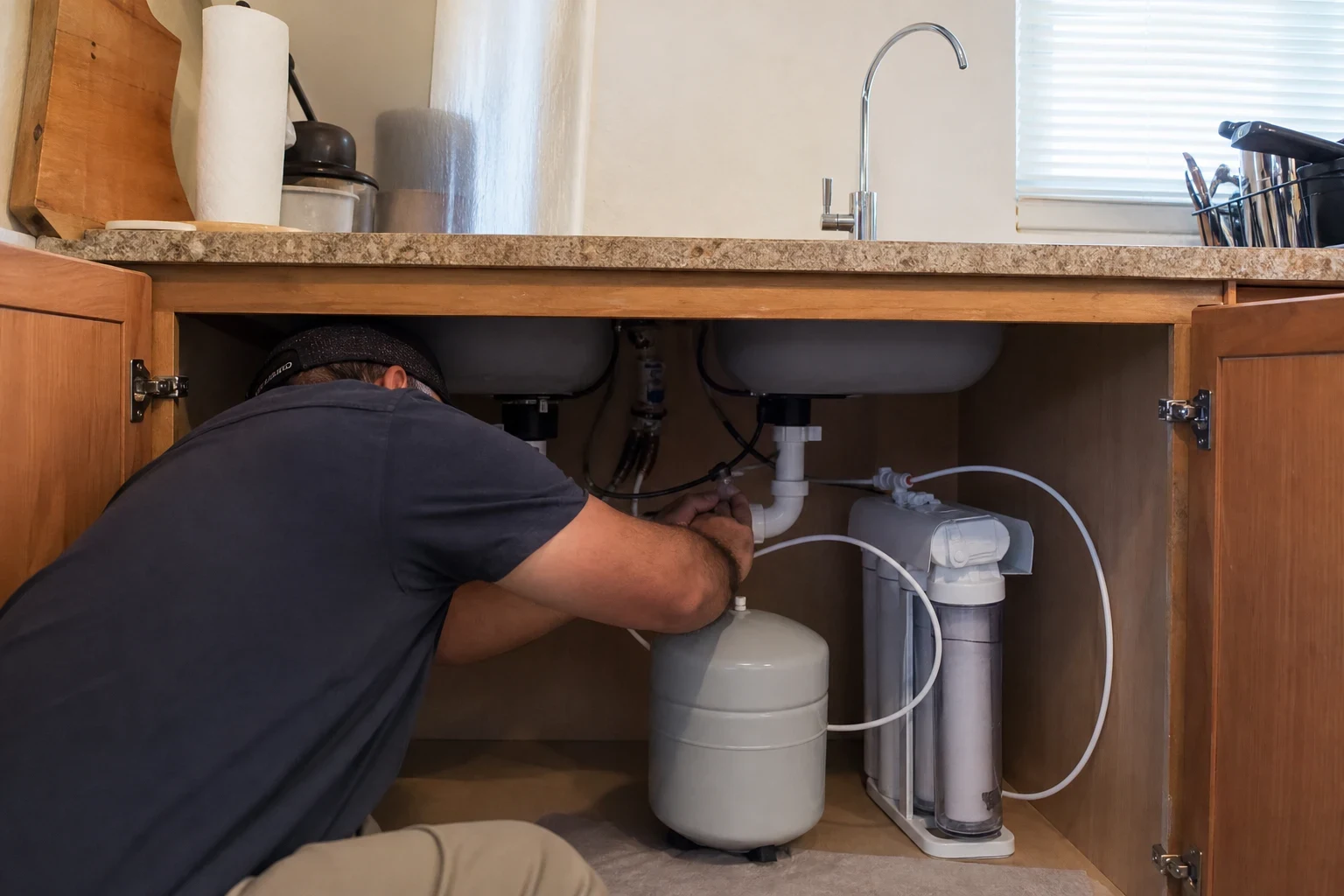
What Reverse Osmosis Does in Your Home
Reverse osmosis pushes water through a semi-permeable membrane that holds back most dissolved minerals, salts and many trace contaminants. What comes out is crisp, clear water at one faucet, usually the kitchen sink. The system lives in a single spot in your kitchen. Your showers, laundry and other taps stay on the regular supply, while the glass you drink from and the pot you cook in get the filtered water.
It makes sense when the taste of your tap water puts you off, when bottled water has become a weekly habit, or when a test shows high dissolved solids. Water across the Valley tends to carry a heavy mineral load, and stripping those minerals out is the job this system does best. For scale on shower glass or chlorine in the bath, whole-home filtration or a water softener suits the problem better, and we will say so plainly.
What Your Reverse Osmosis Install Includes
- 01
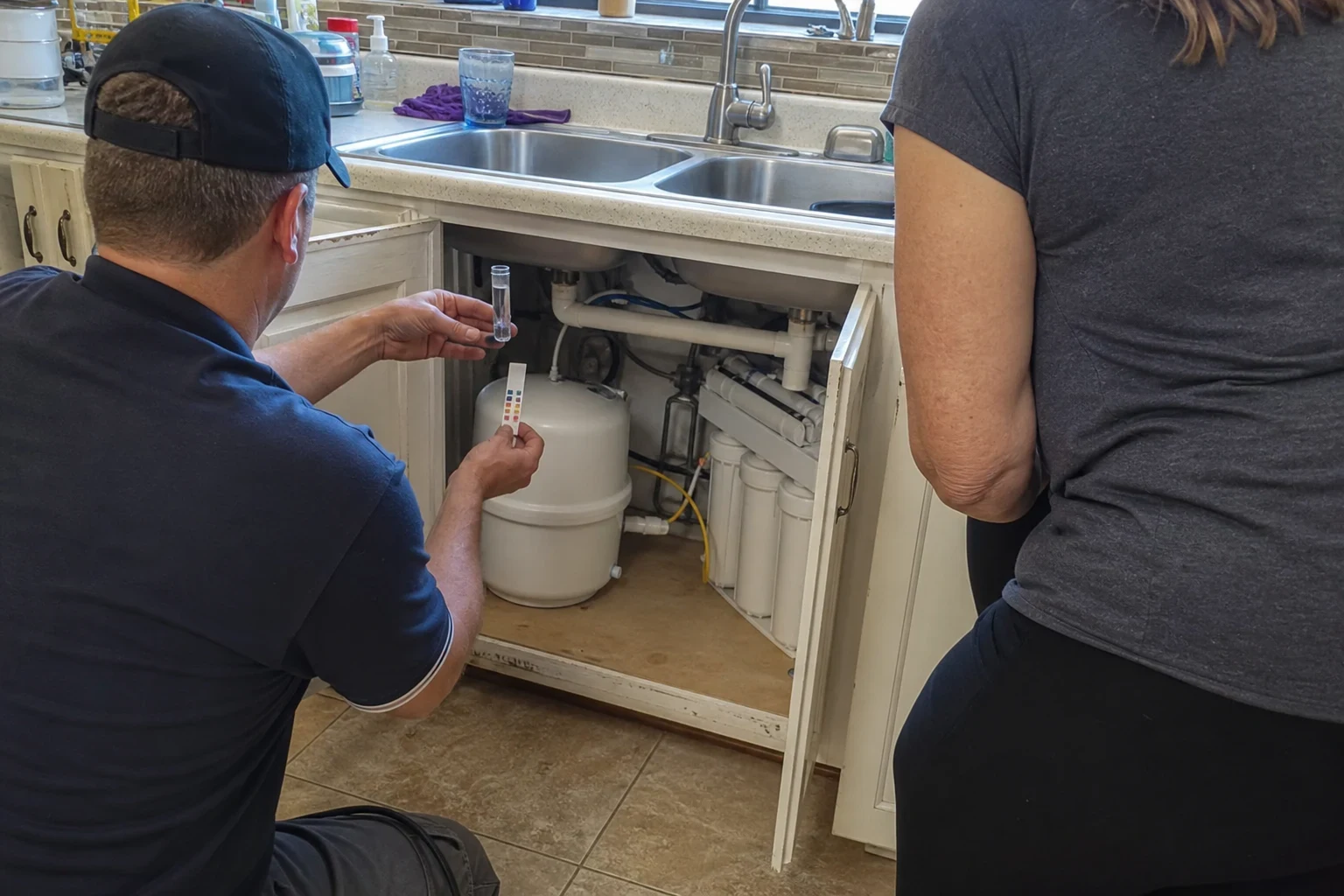
A free water test first
We measure total dissolved solids and hardness at your kitchen tap before recommending a system. Free water test with zero obligation.
- 02
Staged filtration
A sediment prefilter and carbon prefilter protect the membrane, and a final carbon stage polishes taste after the storage tank. Each housing is labeled so you can see which cartridge does what.
- 03
A dedicated faucet
We use an existing sink hole when one is free, or drill a clean opening in your countertop. Stone and quartz get a slower bit, water cooling and a tape guide to keep the edge crisp.
- 04
Drain line and air gap
The wastewater line connects to your sink drain with a proper saddle, positioned so it works alongside a garbage disposal without backflow.
- 05
Optional ice maker or fridge line
We can tee the filtered water to your refrigerator using food-grade tubing routed neatly behind the cabinet wall.
- 06
A visual record of the work
You get pictures of the cabinet before we start, the shut-off valve and drain we tied into, the mounted system and the finished faucet. Install included with water treatment systems.
Questions about Reverse Osmosis?
Call(480) 660-8241Signs a Reverse Osmosis System Makes Sense
You buy cases of bottled water
If the kitchen tap only gets used for rinsing dishes, a dedicated filtered faucet usually earns its place in convenience alone.
White film on your kettle
A chalky ring inside a kettle or coffee maker means minerals are coming through in your drinking water. The membrane holds most of them back before they reach the cup.
Flat or salty taste
High dissolved solids can leave water tasting flat, bitter or faintly salty. Coffee and tea often taste cleaner once those are gone.
Cloudy ice
Ice that comes out cloudy or leaves residue in a glass often points to mineral content in the fridge line.
A high reading on your test
When our meter shows a high dissolved solids figure, a membrane system is the clearest way to lower it at the faucet you actually drink from.
How Install Day Runs
- 1
Clear and record the cabinet
We lay a mat in the cabinet, move your supplies to a towel on the counter, and photograph the plumbing as we found it, including the condition of the cold shut-off valve.
- 2
Mount the system
The filter bank and tank are set where you can reach them for cartridge changes, usually on the side wall, so the rest of the cabinet stays usable.
- 3
Connect water, drain and faucet
We tie into the cold line with a feed valve, fit the drain saddle, and set the faucet. Every push-fit connection is seated and checked by hand.
- 4
Flush, test and show you
We flush the new cartridges, check for drips with dry paper towels under each joint, and take a dissolved solids reading from the new faucet so you can compare it with the regular tap. Then we walk you through shutting it off and changing filters.
- 5
Clean up and hand over
Shavings and packaging leave with us, your supplies go back where they were, and you receive the full photo set for your records.
What Moves the Price of a Reverse Osmosis System
Most of the cost comes down to the system you choose and how your kitchen is set up. We look at your sink cabinet during the free test and give you installed system pricing before any work is scheduled. Nothing gets added on the day without your say.
- Tank or tankless
- A storage-tank unit keeps a reserve of filtered water ready and is the more affordable choice. A tankless model filters as you pour and frees up cabinet room, though it carries a higher price.
- Your countertop
- Using an existing sink hole is quickest. Drilling granite, quartz or solid surface takes more time and care.
- Extra stages
- Remineralization or extra carbon stages add to the cost, as does running a line to your refrigerator or ice maker.
- Pre-treatment needs
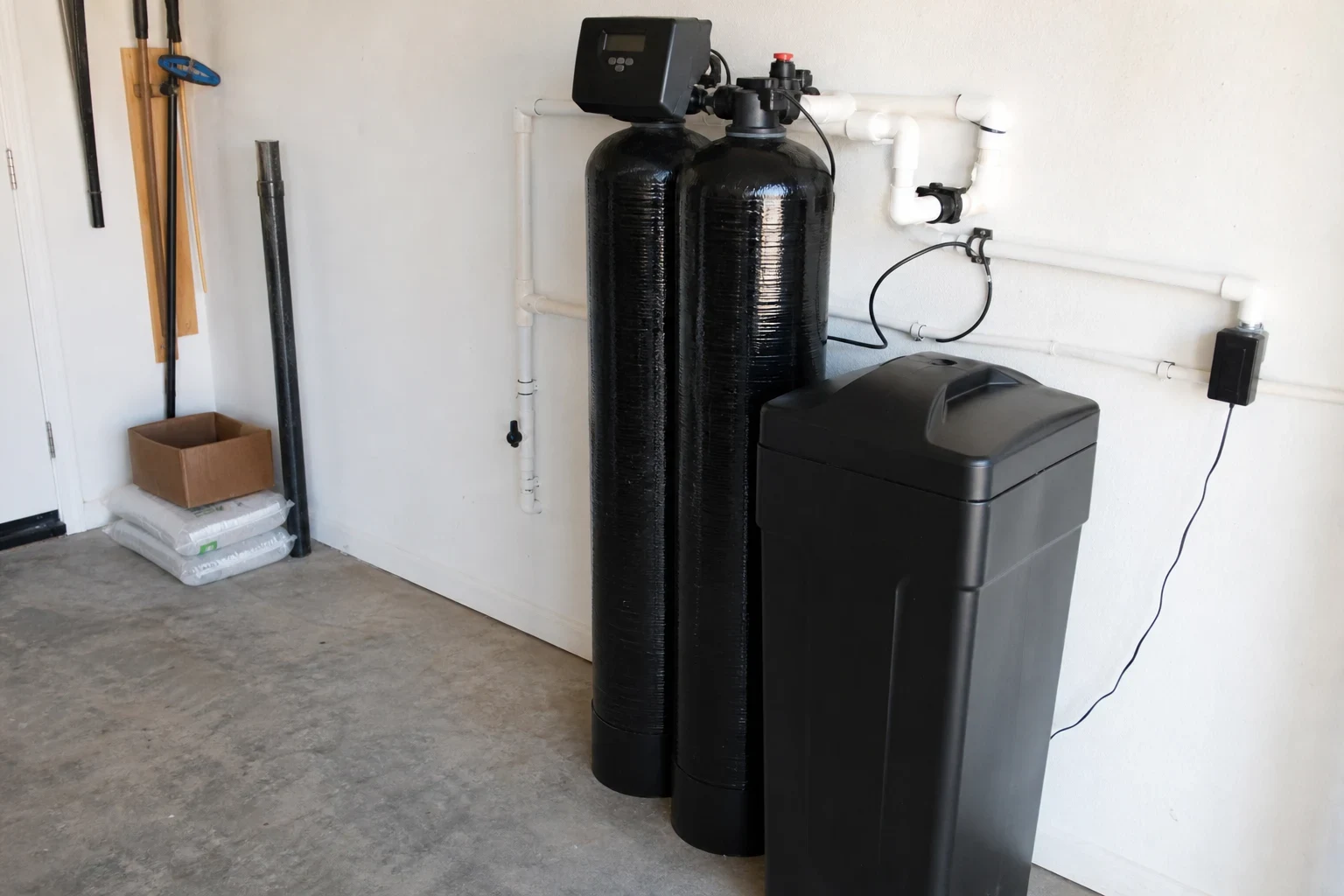
- Very hard water shortens membrane life. If your test shows high hardness, we may suggest a water softener ahead of the system to protect it, and we explain why before you decide.
Reverse Osmosis Questions We Hear
Does a reverse osmosis system waste water?
Yes. The membrane needs a steady stream of water to rinse off the minerals it holds back, and that rinse water goes down the drain. The ratio shifts with the model you pick and the pressure in your lines. Newer designs send noticeably less to the drain, and we can compare models with you when we talk through options.
Does it remove minerals my body needs?
It removes most dissolved minerals, but drinking water is a small source of them compared with food. If you prefer the taste of water with some minerals, a remineralization stage adds a little calcium and magnesium back.
How often do the filters need changing?
Plan on fresh prefilters and a fresh post-filter roughly every twelve months, while the membrane itself lasts several years. Hard water and heavy daily use mean swapping sooner. We note your install date and show you how to change cartridges yourself.
Will it fit with my garbage disposal and other cabinet items?
In most kitchens, yes. We plan the layout around the disposal, any hot water dispenser and your storage before mounting anything, and the before pictures let you see exactly what changed.
Can I run it to my refrigerator?
Usually. We route tubing from the system to the fridge line and fit a shut-off so the connection can be serviced. Fridges with their own internal filter can keep it or use a bypass plug.
See What Is in Your Water Before You Choose
We test at your kitchen tap, explain the reading, and give you installed system pricing if reverse osmosis fits. We serve Peoria along with Sun City West, Surprise and the surrounding area.